Skip to content
HT / LT Panels
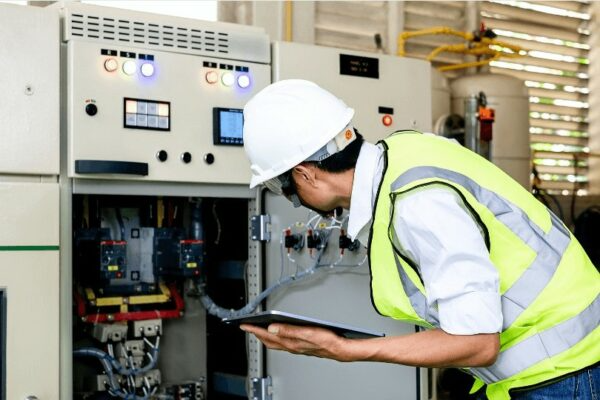
HT LT Control Panel
Busbar and Cable Chamber Maintenance
- Isolate and discharge panels before commencing the job.
- Measure the insulation resistance of incoming cable & bus separately.
- Inspect insulation on any outbound feeder cables & wiring.
- Check the bus bar’s support insulators for cracks, deformation, color changes, stresses, and foreign material.
- Any insulation maintenance essentially entails keeping all insulating surface clean. This can be accomplished by wiping down insulating surfaces with a dry, lint-free cloth or paper towel.
- Clean the collected dust (or) moisture on epoxy resin post insulators with a soft, dry cloth, and refresh as needed.
- To remove stubborn dirt, use a mild solvent (or) distilled water if wiping is ineffective. However, before using the surfaces, ensure that they are completely dry.
- Inspect contacts and remove any dust deposits. If the contact surfaces are rough, treat them with fine emery paper. Use a thin layer of petroleum jelly as needed.
- Ensure mounting screws & nuts are tight & connections are properly aligned.
- Check insulators for tightness. Do not put additional stress on the insulators. (They may crack.)
- Inspect bus bars and chambers for wear and damage. Clean as needed with plate polish. Check the bus bar’s connecting bolts for tightness.
- Inspect wiring & terminations for discoloration from heat, exposed conductors, and loose connections.
- Inspect control & power cabling terminations for discoloration from heat scorched or exposed conductors, and loose connections.
- Ensure air vents are not clogged.
- Check CT scans for any abnormalities.
- Ensure CT secondary neutrals are properly earthed.
- Determine the IR and continuity of the anti-condensation (space) heater. The resistance of space heaters must fall within the limits provided by the vendor.
- Verify the earth connections for safety & tightness.
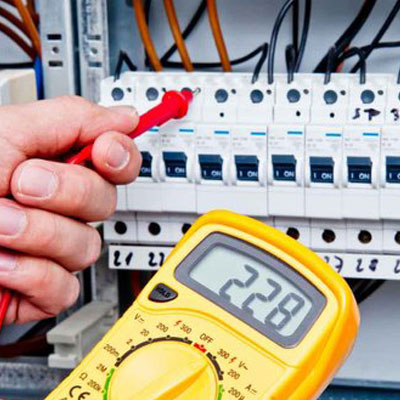
- Use a 2500V megger to measure & record insulation values for each panel’s bus bar & out-going cables.
Breaker and Meter Compartment Maintenance
- Inspect switches for proper operation and internal components, including fuses and terminals.
- Check fuse connections for tightness and correct rating. Renew the fuse as needed.
- Inspect control fuses for CTs and PTs. Check the fuse holder for overheating and ensure that the fuses are of the correct rating.
- Clean dust from panel and verify for proper sealing.
- Ensure each circuit labels are appropriately connected to their respective panels.
- Inspect and test the draw-out mechanism, lubricate as needed, and ensure smooth operation.
- Inspect and test the safety shutters mechanism to ensure smooth & proper operation.
- Inspect breaker wiring for evidence of overheating and damage.
- Ensure that every connection are tight and secure.
- Check the Line and Bus -PTs for any abnormalities.
- Earth the secondary neutrals of Line and Bus-PTs.
- Inspect, clean, and test all auxiliary devices, including relays, contacts, and control transformers.
- Inspect the breaker and panel mounted limit switches.
- Check & clean earth & auxiliary contacts. Check that all connections are tight and secure.
- Measure insulation. Resistance of the main and control circuits.
- Ensure proper operation of all indication flags and lamps.
- Clean and lubricate all door hinges and locks.
- Manually operate protection devices and monitor for tripped breakers.
HT Panel Maintenance
- Clean the panel both within and externally.
- Check control and power connections for tightness.
- Inspect lugs and cables for signs of overheating.
- Ensure tightness of the main busbar & coupler.
- Examine earthing for tightness.
- Ensure the panel is vermin-proof.
- Inspect heater and thermostat performance.
- Check ON/OFF and emergency push buttons.
- Use a 5 KV Megger to measure the I.R. value of the bus bar. (Phase to Earth & Phase to Phase) Before removing the Bus and Line PT/PT fuses.
- After Meggering, insert the PT/PT fuses.
- Test the electrical ON/OFF & spring charging of the breaker at the TEST position.
- Test the mechanical on-off & spring charging of the breaker at the TEST position.